People
Nelson Mandela
A lawyer from the Eastern Cape who, after 27 years in prison, governed without revenge and negotiated South Africa’s way out of apartheid into democracy
In numbers
27
years in prison
from 1962 to 1990, 18 of them on Robben Island
1993
Nobel Peace Prize
jointly with de Klerk, the last apartheid president
1994
first freely elected president
after the first elections in which everyone could vote
- Lifespan
- 18 July 1918 to 5 December 2013
- Origin
- Mvezo, South Africa
- Role
- Lawyer, ANC leader and South Africa’s first democratically elected president
- Award
- Nobel Peace Prize 1993, jointly with Frederik Willem de Klerk
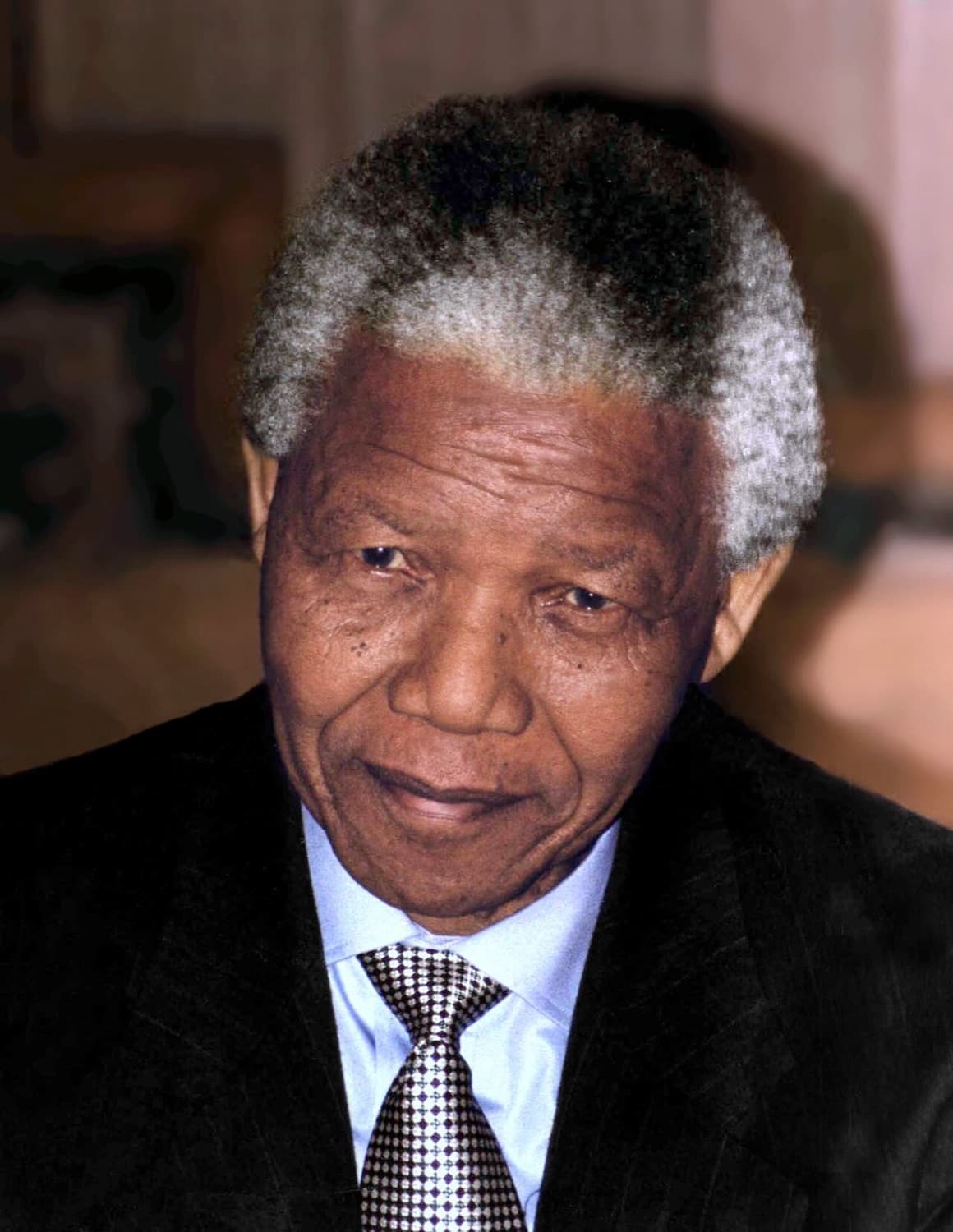
Who was Nelson Mandela?
Nelson Mandela was a South African lawyer and politician who led the resistance against apartheid and in 1994 became South Africa’s first democratically elected president. He was born Rolihlahla Mandela on 18 July 1918 in the village of Mvezo in the Eastern Cape. His father was a counsellor to the acting king of the Thembu people. A primary school teacher gave him the name Nelson, following the custom of the time of giving all schoolchildren a Christian name.
He had to leave his studies at the University College of Fort Hare because he had taken part in a student protest. In 1941 he went to Johannesburg, worked first as a mine security officer and then trained at a law firm. In 1952 he and Oliver Tambo founded South Africa’s first Black-owned law firm. He only obtained his law degree in 1989, by distance learning, in the last months of his imprisonment.
He became politically active from 1942. In 1944 he joined the African National Congress and helped to found its Youth League, which pushed the ANC towards more determined mass politics. From 1948 the ruling National Party enforced racial segregation as apartheid, and he joined the resistance against it. From 1956 to 1961 he stood trial in the so-called Treason Trial and was acquitted in the end.
After his conviction at the Rivonia Trial he spent a total of 27 years in prison, most of them on Robben Island off Cape Town. After his release in 1990 he negotiated the end of apartheid and served as president from 1994 to 1999. Afterwards he devoted himself to his foundations, among them the Nelson Mandela Foundation. He died in Johannesburg on 5 December 2013 at the age of 95.
What did Nelson Mandela stand for?
He stood for a democratic South Africa in which people of every skin colour have the same rights. Apartheid dictated where people could live, work and learn, and excluded the Black majority from elections. His whole political life was directed against this system. His aim was not to reverse the balance of power, but a society without the domination of one group over another.
At the beginning came nonviolent resistance. The Nobel Committee wrote in 1993 that he had initially been inspired by Mahatma Gandhi’s methods of nonviolence. Gandhi had himself lived in South Africa decades earlier and developed his approach of nonviolent resistance there. The Defiance Campaign of 1952, which Mandela led as National Volunteer-in-Chief, was a joint programme of the ANC and the South African Indian Congress and relied on deliberate, peaceful law-breaking.
After the Sharpeville massacre on 21 March 1960, in which police killed 69 unarmed people, and the banning of the ANC, he changed course. He argued for an armed wing and in 1961 helped to build Umkhonto weSizwe. In the Nobel Committee’s account, the political climate had hardened so much that peaceful paths seemed blocked. This step remains the most disputed part of his life.
After his release, reconciliation was at the centre. He negotiated with the government that had imprisoned him and aimed for a transition that excluded no one. The Nelson Mandela Foundation emphasises that he never answered racism with racism. Even after his presidency, education, equality and democracy remained his concerns.
From his speech from the dock at the Rivonia Trial on 20 April 1964.
I have fought against white domination, and I have fought against black domination. I have cherished the ideal of a democratic and free society in which all persons live together in harmony and with equal opportunities.
What did Nelson Mandela achieve for peace?
Together with Frederik Willem de Klerk he led South Africa out of apartheid into democracy without the country falling into open civil war. From 1985, while still in prison, he sought talks with the government. He rejected at least three conditional offers of release. After his release on 11 February 1990 he went, in the Nobel Committee’s words, straight from prison to the negotiating table.
In 1991 he became president of the ANC. In the years that followed, the apartheid laws were abolished, a provisional constitution was adopted and a date for free elections was set. In 1993 the Nobel Committee awarded him and de Klerk the Peace Prize for their work for the peaceful termination of the apartheid regime. It wrote that both had chosen reconciliation over an ever more bitter and bloody conflict.
On 27 April 1994 he was able to vote for the first time in his life, and on 10 May 1994 he was inaugurated as the first democratically elected president. As he had promised, he stepped down in 1999 after one term. In doing so he set an example for the peaceful handover of power. For a country that had never known free elections for all, this was an important step.
In his Nobel Lecture he explicitly placed himself in a line with earlier laureates: Albert Lutuli and Desmond Tutu from South Africa and Martin Luther King from the United States. King, he said, had grappled with the same questions of war and peace, violence and nonviolence, racism and human dignity. Since 2010 the United Nations has marked his birthday, 18 July, every year as Nelson Mandela International Day.
What criticism is there of Nelson Mandela?
Most criticism concerns the armed struggle he helped to build from 1961. According to the Nobel Foundation’s biography, he proposed a military wing after the ANC was banned. In June 1961 the ANC leadership decided not to stop members who wished to take part. Umkhonto weSizwe began on 16 December 1961 with a series of explosions, and Mandela received military training in Morocco and Ethiopia.
At the Rivonia Trial in 1964 he was convicted of sabotage; the charge was plotting to overthrow the government by violence. The apartheid government designated the ANC a terrorist organisation. This classification had a long afterlife: according to a BBC report, Mandela remained on a United States terrorism watch list until 2008. Only a bill signed by President George W. Bush in July 2008 removed it.
The 1993 Nobel Peace Prize was not uncontested either. It went jointly to Mandela and to de Klerk, that is, to representatives of the oppressed and of the former government. In his speech the chairman of the Nobel Committee himself asked whether they should have waited until reconciliation had finally succeeded, and acknowledged that some would say so. According to him, tens of thousands of people were killed while the negotiations were under way.
The Nobel Committee explained the turn to armed struggle with a climate that had hardened inexorably after Sharpeville. Those who defend it point to the blocked peaceful paths; those who criticise it point to violence as a means. Both views are part of his story. The Nobel Foundation also records that in prison he refused every offer to compromise his political position in exchange for his own freedom.
From his Nobel Lecture at Oslo City Hall on 10 December 1993.
Let it never be said by future generations that indifference, cynicism or selfishness made us fail to live up to the ideals of humanism which the Nobel Peace Prize encapsulates.
What is Nelson Mandela’s legacy?
Above all, his legacy is the example of a transition in which yesterday’s opponents negotiate a new order together. The Nobel Committee called the reconciliation policy of Mandela and de Klerk an example that there are ways out of the vicious circle of violence and bitterness. Many observers were struck by the apparent lack of bitterness he showed after 27 years in prison. According to the committee, he himself said he might have harboured bitter thoughts had he not had a job to do.
The Nelson Mandela Foundation, the Nelson Mandela Children’s Fund and the Mandela Rhodes Foundation continue his work. The Foundation describes him as a man who never wavered in his devotion to democracy, equality and learning. The United Nations’ Mandela Day on 18 July calls on people every year to serve others. His name is thus tied to a day of personal engagement.
He holds a particular place in the history of nonviolence. He began with the methods Gandhi had developed in South Africa, turned away from them under the pressure of circumstances and returned to a peaceful solution as a negotiator. Martin Luther King was a point of reference for him, whom he named explicitly in Oslo. A shared question links him with both: how to end injustice without creating new injustice.
For peace work today, the lesson is that peace after a long conflict has to be negotiated, and that this requires talking to the opponent. His path also shows the limits: apartheid ended, but as early as 1993 the Nobel Committee wrote that the vicious circle of violence and bitterness had not yet been decisively broken. The chairman of the committee added that work for peace and reconciliation requires ceaseless effort. His life is an example of that.
Also from the Nobel Lecture of 10 December 1993.
Let the strivings of us all, prove Martin Luther King Jr. to have been correct, when he said that humanity can no longer be tragically bound to the starless midnight of racism and war.
Frequently asked questions
- When and where did Nelson Mandela live?
- Nelson Mandela was born in Mvezo, South Africa, and lived from 18 July 1918 to 5 December 2013.
- Why did Nelson Mandela receive the Nobel Peace Prize?
- Nelson Mandela received the Nobel Peace Prize in 1993, jointly with Frederik Willem de Klerk. The Nobel Committee honoured both for their work for the peaceful termination of the apartheid regime.
- What role did Nelson Mandela play?
- Nelson Mandela was a lawyer, ANC leader and South Africa’s first democratically elected president.
Sources
Life
- 1944He joins the African National Congress and helps to found its Youth League.
- 1952He leads the Defiance Campaign, civil disobedience against six unjust laws, together with the South African Indian Congress.
- 1961After the Sharpeville massacre and the banning of the ANC, he helps to found the armed wing Umkhonto weSizwe.
- 1964At the Rivonia Trial he gives his speech from the dock. On 12 June he is sentenced to life imprisonment.
- 1990On 11 February he walks out of Victor Verster Prison, nine days after the ban on the ANC is lifted.
- 1993Together with President Frederik Willem de Klerk he receives the Nobel Peace Prize in Oslo.
- 1994On 27 April he votes for the first time in his life. On 10 May he is inaugurated as president.
More portraits
- Martin Luther King15 January 1929 to 4 April 1968A pastor from Atlanta who showed that racial segregation could be overcome through boycotts, marches and speeches, without ever turning to violence himself
- Mahatma Gandhi2 October 1869 to 30 January 1948A lawyer from Porbandar who turned nonviolent resistance into a method for millions and so shaped movements far beyond India
From role model to a mission of your own
None of these people acted alone. What connects them is the step from concern to action. That step is possible on a small scale too: in a neighbourhood, a school, a club.
Find your peace mission