People
Martin Luther King
A pastor from Atlanta who showed that racial segregation could be overcome through boycotts, marches and speeches, without ever turning to violence himself
In numbers
1964
Nobel Peace Prize
at 35, the youngest laureate up to that time
382
days of bus boycott
in Montgomery, until the buses ran without segregation
250,000
people in Washington
at the 1963 march with the “I Have a Dream” speech
- Lifespan
- 15 January 1929 to 4 April 1968
- Origin
- Atlanta, United States
- Role
- Baptist minister and leader of the civil rights movement
- Award
- Nobel Peace Prize 1964
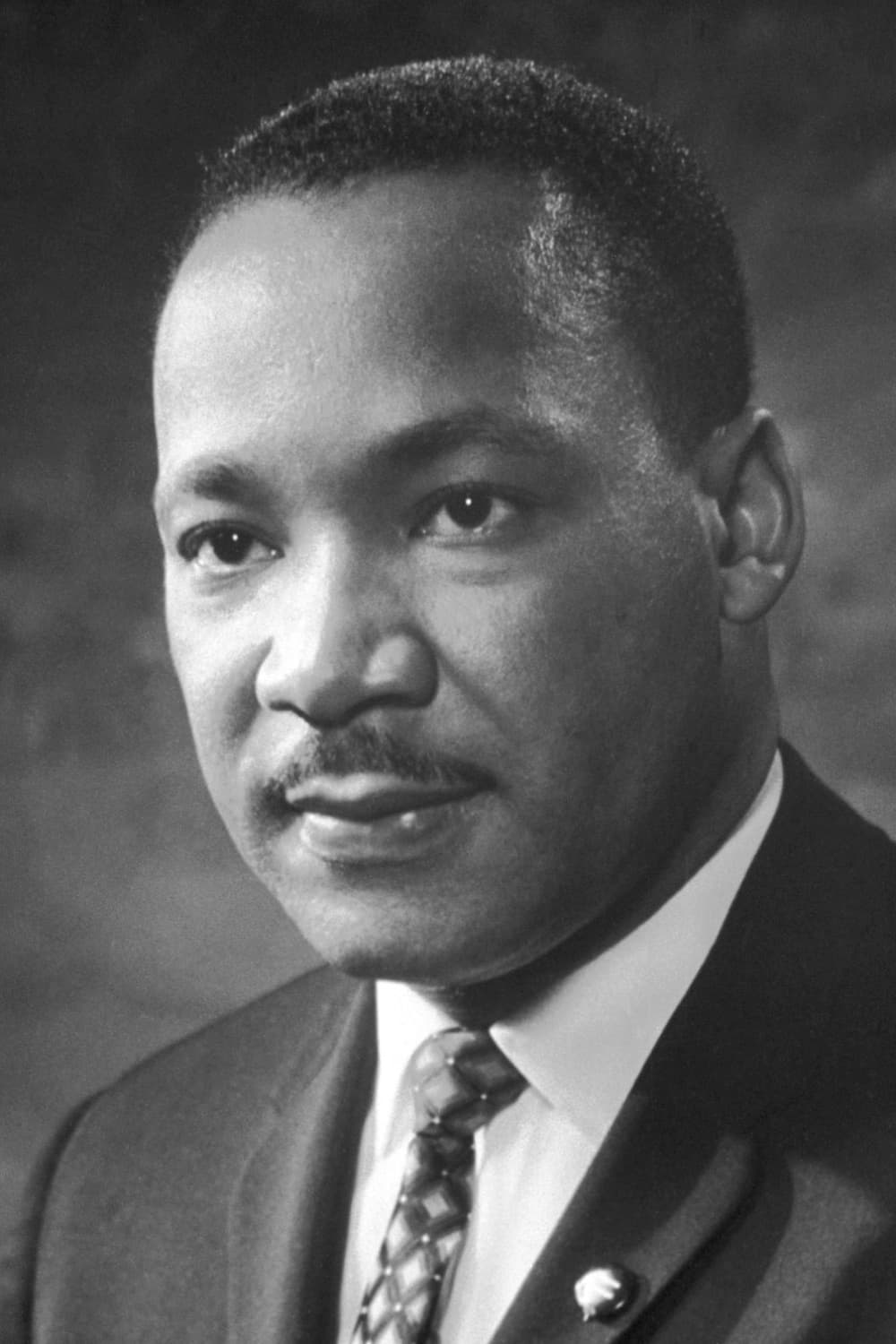
Who was Martin Luther King?
Martin Luther King was an American Baptist minister and the best-known voice of the civil rights movement in the United States. He was born in Atlanta on 15 January 1929 and was first named Michael Luther King; his first name was changed to Martin later. His grandfather and his father had both been pastors of Ebenezer Baptist Church in Atlanta, where he himself served as co-pastor from 1960. He grew up in a South where schools, buses and restaurants were separated by skin colour.
His education moved quickly. He finished school at fifteen, earned a degree from Morehouse College in Atlanta in 1948 and then studied theology at Crozer Theological Seminary in Pennsylvania. He received his doctorate from Boston University in 1955. In Boston he met Coretta Scott, whom he married and with whom he had four children.
In 1954 he became pastor of Dexter Avenue Baptist Church in Montgomery, Alabama. There, at the end of 1955, he took the lead of the bus boycott that made him known across the country. Two years later he became president of the Southern Christian Leadership Conference, an organisation meant to give new leadership to the growing civil rights movement. According to the Nobel Foundation’s biography, between 1957 and 1968 he travelled more than six million miles and gave over 2,500 speeches.
He was arrested more than twenty times and physically assaulted at least four times, and his home in Montgomery was bombed. On 4 April 1968 he was shot on the balcony of his motel in Memphis, Tennessee. He had gone there to lead a protest march for striking sanitation workers. He was 39 years old.
What did Martin Luther King stand for?
He stood for equal civil rights for African Americans and for reaching that goal by nonviolent means only. The Nobel Committee cited his nonviolent struggle for civil rights when awarding him the prize. He wanted to end segregation in schools, transport and shops and to secure the vote for everyone. Behind this lay the conviction that people should be judged by their character and not by the colour of their skin.
He drew on two sources. For the Southern Christian Leadership Conference he took the ideals from Christianity and the methods of resistance from Mahatma Gandhi, as the Nobel Foundation’s biography puts it. He had studied Gandhi as a student; the King Institute at Stanford University quotes him as saying that Christ showed the way and Gandhi in India showed it could work. For him, nonviolence was not a tactic for the moment but an attitude that respects the opponent as a human being.
In practice this meant boycotts, marches, sit-ins and civil disobedience. Those who took part were expected to endure violence but not return it. In his Nobel Lecture he described how the movement had taken suffering upon itself instead of inflicting it on others. The television images of police dogs and water hoses turned on young demonstrators in Birmingham in 1963 caused national outrage and increased the pressure for new civil rights laws.
In his last years he widened his focus. According to the King Center, from 1965 onwards economic justice and international peace moved to the centre of his work. He led campaigns in Chicago, spoke out against the Vietnam War and planned the “Poor People’s Campaign”, an alliance of poor Americans of different backgrounds. He saw poverty and war as parts of the same problem as racism.
From his speech accepting the Nobel Peace Prize at the University of Oslo on 10 December 1964.
I believe that unarmed truth and unconditional love will have the final word in reality.
What did Martin Luther King achieve for peace?
He played a decisive part in ending legal segregation in the United States without civil war and without armed uprising. The Montgomery bus boycott lasted 382 days and ended in December 1956, after the Supreme Court had declared segregation on buses unconstitutional. During that time thousands of people walked to work every day. The boycott became a model for many further nonviolent actions.
In 1963 came the protests in Birmingham and the March on Washington, attended by around 250,000 people. In the view of the King Center, the march helped Congress pass the Civil Rights Act in 1964. The law banned discrimination in employment, public accommodations, education and transport. A year later the Voting Rights Act removed the remaining barriers to voting.
At 35 he received the Nobel Peace Prize in 1964, the youngest laureate at the time. According to the Nobel Foundation he gave the prize money of 54,123 dollars to the civil rights movement. In his Nobel Lecture he proposed that the philosophy of nonviolence be tested in every field of human conflict, explicitly including relations between nations. In doing so he carried the idea from the American question of race to the question of war and peace.
His influence reached beyond the United States. Nelson Mandela named him among his predecessors in his own Nobel Lecture in 1993 and said that King, too, had grappled with the great questions of war and peace, violence and nonviolence. The path he had taken from Gandhi was thus handed on to other movements. His example showed that nonviolent pressure can force political change that had seemed impossible.
What criticism is there of Martin Luther King?
In his lifetime, criticism came from very different directions: from parts of the civil rights movement, from major newspapers and from the state itself. Within the movement some thought his nonviolent course too slow. From 1966 organisations such as the Student Nonviolent Coordinating Committee turned away from nonviolence under the slogan “Black Power”. He rejected the term because he heard in it connotations of violence and separatism, but he tried to understand the disappointment behind it.
His speech against the Vietnam War on 4 April 1967 met with broad rejection. According to the King Institute at Stanford University, the Washington Post and the New York Times criticised the speech in editorials. The civil rights organisation NAACP and the diplomat Ralph Bunche also accused him of linking two separate issues. He nevertheless held to his position and argued it on moral and economic grounds.
The FBI monitored him from the bus boycott in 1955 onwards and took covert action against him in the 1960s. Director J. Edgar Hoover suspected Communist influence but found no evidence of it. The surveillance produced alleged evidence of extramarital affairs, which the FBI used to discredit him with supporters and the media. A US Senate committee concluded in the 1970s that this campaign had harmed the movement.
His own record also remained unfinished. The laws of 1964 and 1965 ended legal segregation, but not the poverty he placed at the centre of his final years. According to the King Center, the “Poor People’s Campaign” was to be the culmination of his work in those years. He did not live to see its outcome, and the question of how poverty could be overcome without violence remained open after his death.
From his Nobel Lecture in Oslo on 11 December 1964.
We adopt the means of nonviolence because our end is a community at peace with itself.
What is Martin Luther King’s legacy?
Above all, his legacy is the proof that an oppressed minority can win its rights without weapons. According to the King Center, his “I Have a Dream” speech, his Nobel Lecture and the “Letter from Birmingham Jail” are among the most revered texts in the English language. They are read in schools and studied at universities worldwide. The Birmingham letter is regarded as the clearest statement of his approach.
The United States honours him with a national holiday, the only person so honoured who was not a president. A memorial to him stands on the National Mall in Washington. In 1968 his widow Coretta Scott King founded the Martin Luther King Jr. Center for Nonviolent Social Change in Atlanta. It is meant to continue his work and pass on the method of nonviolence.
His ideas flowed on into other movements. He had learned from Gandhi, and Nelson Mandela referred to him in Oslo in 1993. This forms a line that runs from India through the United States to South Africa. None of the three took the same path, but all of them wrestled with the question of how to overcome injustice without creating new injustice.
For peace work today, one idea from his Nobel Lecture stands out: nonviolence as a method deserves serious testing in every conflict. He did not mean passivity, but organised, persistent pressure that seeks to win the opponent over rather than destroy him. His own life shows that this path takes time, courage and many people. It also shows that it can succeed.
Also from the Nobel Lecture of 11 December 1964.
I am still convinced that nonviolence is both the most practically sound and morally excellent way to grapple with the age-old problem of racial injustice.
Frequently asked questions
- When and where did Martin Luther King live?
- Martin Luther King was born in Atlanta, United States, and lived from 15 January 1929 to 4 April 1968.
- Why did Martin Luther King receive the Nobel Peace Prize?
- Martin Luther King received the Nobel Peace Prize in 1964, at 35 the youngest laureate up to then. The Nobel Committee cited his nonviolent struggle for civil rights.
- What role did Martin Luther King play?
- Martin Luther King was a Baptist minister and leader of the civil rights movement.
Sources
Life
- 1955In Montgomery, Alabama, he takes the lead of the bus boycott. After 382 days, Black and white passengers ride the city’s buses as equals.
- 1957He becomes president of the newly founded Southern Christian Leadership Conference, which he leads until his death.
- 1963After the protests in Birmingham he writes the “Letter from Birmingham Jail” in prison. In August he speaks at the March on Washington.
- 1964Congress passes the Civil Rights Act. In December he accepts the Nobel Peace Prize in Oslo.
- 1965The march from Selma to Montgomery is followed by the Voting Rights Act, which removes the barriers to voting.
- 1967At Riverside Church in New York he speaks out publicly against the Vietnam War and draws wide criticism for it.
- 1968On 4 April he is assassinated in Memphis, Tennessee, where he had come to support a strike by sanitation workers.
More portraits
- Mahatma Gandhi2 October 1869 to 30 January 1948A lawyer from Porbandar who turned nonviolent resistance into a method for millions and so shaped movements far beyond India
- Nelson Mandela18 July 1918 to 5 December 2013A lawyer from the Eastern Cape who, after 27 years in prison, governed without revenge and negotiated South Africa’s way out of apartheid into democracy
From role model to a mission of your own
None of these people acted alone. What connects them is the step from concern to action. That step is possible on a small scale too: in a neighbourhood, a school, a club.
Find your peace mission