People
Henry Dunant
A Geneva businessman who cared for the wounded after a battle and turned the experience into the idea of the Red Cross and the Geneva Convention
In numbers
1859
Battle of Solferino
afterwards Dunant helps the wounded in Castiglione
12
States
sign the first Geneva Convention in 1864
1901
First Nobel Peace Prize
shared with the pacifist Frédéric Passy
- Lifespan
- 8 May 1828 to 30 October 1910
- Origin
- Geneva, Switzerland
- Role
- Businessman, co-founder of the Red Cross and originator of the Geneva Convention
- Award
- Nobel Peace Prize 1901, shared with Frédéric Passy
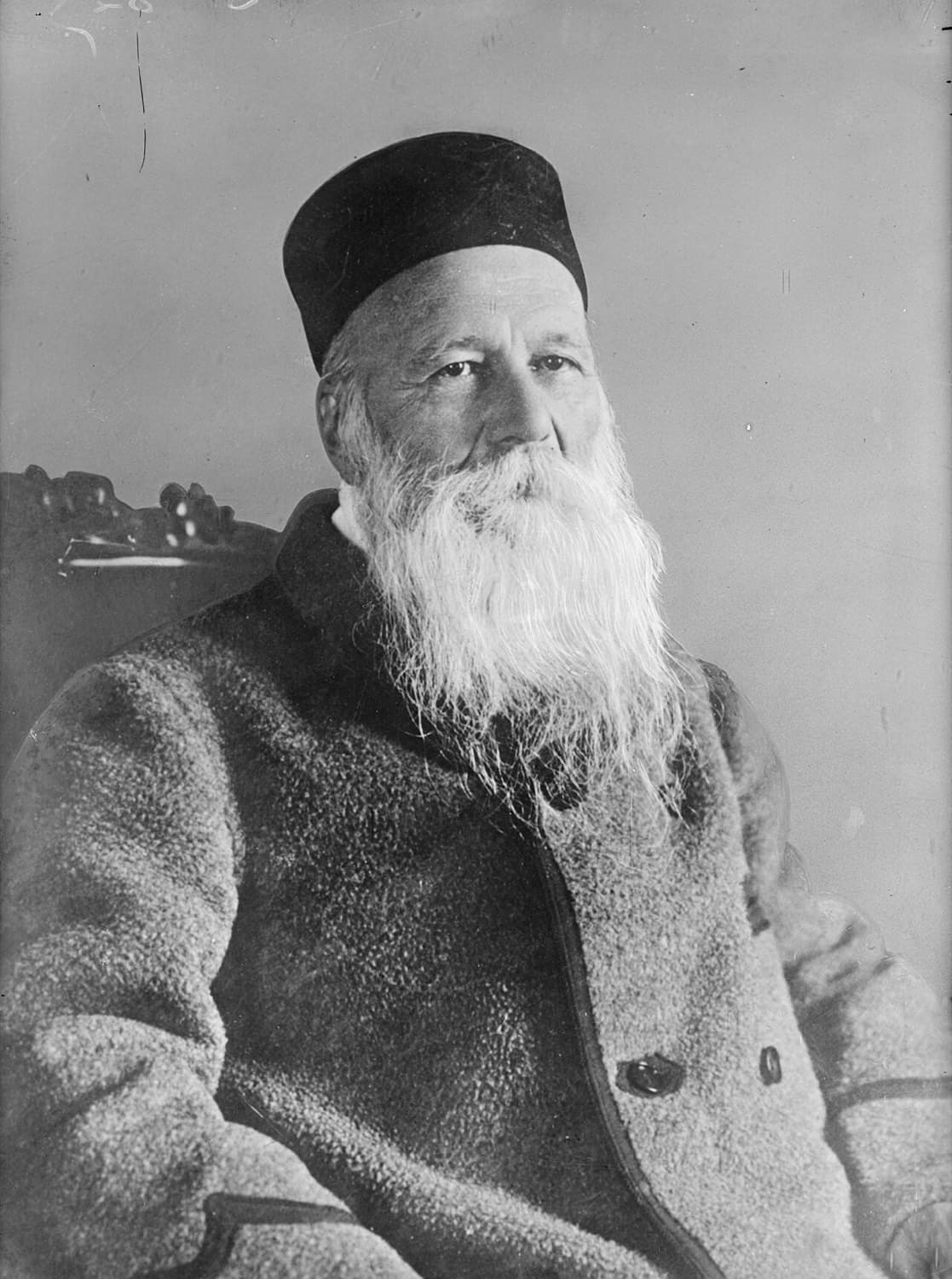
Who was Henry Dunant?
Henry Dunant was a Geneva businessman whose book about the Battle of Solferino gave the impetus for the founding of the Red Cross and the first Geneva Convention. He was born in Geneva on 8 May 1828, into a household the Nobel Foundation describes as religious, humanitarian and civic minded. In 1901 he received the first Nobel Peace Prize together with the French pacifist Frédéric Passy. He died on 30 October 1910 in the hospital of the Swiss village of Heiden.
As a young man he was deeply involved in religious circles. He joined a group of young people of the Free Church and corresponded with similar groups in several countries. According to the International Committee of the Red Cross, he founded the World Alliance of Young Men’s Christian Associations with friends in Paris in 1855. This already showed his sense for movements that work across national borders.
At twenty six he entered business as a representative of a Geneva colonial company in North Africa and Sicily. Later he founded a milling company in Algeria, which France had conquered some twenty years earlier. To run it he needed land and water rights from the French authorities. In 1859 he travelled to northern Italy to put his case to Emperor Napoleon III in person, who was then at war there.
This journey changed his life. Near Solferino he found himself in the aftermath of one of the bloodiest battles of the nineteenth century. What he saw there became his book, and the book became an international movement. In the words of the Nobel Foundation, the rest of his life was a study in contrasts: great fame and total obscurity, success in business and bankruptcy.
What did Henry Dunant stand for?
He campaigned for wounded soldiers to be cared for, regardless of which side they had fought on. After the Battle of Solferino in June 1859 he helped in the church of Castiglione, where the wounded lay on the stone floor. Without any medical training he cleaned wounds, brought water and listened to the last wishes of the dying. He persuaded local women to care for French soldiers too, and soon they were repeating his words “Tutti fratelli”, all are brothers.
Out of this experience he wrote “Un Souvenir de Solférino”, published in 1862. The book first describes the battle, then the misery on the battlefield and in Castiglione. It ends with a plan: states should form relief societies in peacetime that train volunteers and care for the wounded in war. This was to be combined with a treaty obliging armies to care for all wounded soldiers.
The idea of neutrality was central. Helpers, field hospitals and the wounded should be protected and recognisable by a common sign. The International Committee of the Red Cross describes how Dunant presented these ideas to rulers and ministers across Europe. On his journey in 1863 he was received by the King of Prussia and the King of Saxony, among others.
Later he broadened his concerns. He campaigned for the protection of prisoners of war and for extending the convention to naval forces. In 1872 he convened a conference to consider an agreement on prisoners of war and the settlement of international disputes by courts of arbitration. According to the Committee, in the last years of his life he devoted himself to the struggle for international arbitration, disarmament and peace.
The central question of “Un Souvenir de Solférino” from 1862, in the English version quoted in the Dunant biography published by the International Committee of the Red Cross.
Would it not be possible, in time of peace and quiet, to form relief societies for the purpose of having care given to the wounded in wartime by zealous, devoted and thoroughly qualified volunteers?
What did Henry Dunant achieve for peace?
He gave the impetus for two institutions that still exist today: the Red Cross movement and international humanitarian law. On 7 February 1863 the Geneva Society for Public Welfare appointed a committee of five, with Dunant as secretary, to examine his plan. This committee became the International Committee of the Red Cross. In October 1863 an international conference in Geneva followed, which adopted a red cross on a white background as the protective emblem.
On 22 August 1864 twelve states signed the first Geneva Convention. It obliged armies to care for all wounded soldiers and placed medical personnel under protection. The Nobel Foundation sums it up by saying that Dunant had transformed a personal idea into an international treaty. The four Geneva Conventions of 1949 and their Additional Protocols trace back to this convention.
The movement grew quickly. The first national society was founded in Württemberg in November 1863, and as early as 1864 the Committee sent delegates to both sides of the front in the war between Germany and Denmark. When Dunant was rediscovered in 1895, according to the Committee, 37 countries had their own Red Cross societies. 42 states had signed the Geneva Convention.
In 1901 he received the first Nobel Peace Prize for his humanitarian efforts to help wounded soldiers and create international understanding. The committee shared the prize between him and Frédéric Passy, a representative of the peace movement. Four years later the prize went to Bertha von Suttner, the first woman to be honoured. Dunant did not spend the prize money and left it to charitable institutions in Switzerland and Norway.
What criticism is there of Henry Dunant?
The most serious criticism in his lifetime concerned his business collapse. In 1867 the bank Crédit Genevois, on whose board he sat, went bankrupt, and his ventures in Algeria had failed. A civil court convicted all members of the board and, according to the Committee, held Dunant alone responsible for having wilfully deceived his colleagues. He was left with debts of nearly a million francs, and many of his Geneva friends were affected by the losses.
The bankruptcy led to a break with the Committee he had helped to found. There had already been internal criticism of him in 1864, and Gustave Moynier, who later led the Committee for half a century, regarded him with misgivings. In 1867 Dunant submitted his resignation as secretary. The Committee accepted it, not only as secretary but also as a member. He never saw his home town of Geneva again.
It is also part of the picture that the Red Cross was not the work of one man. Dunant supplied the idea and promoted it across Europe, but putting it into practice was the work of a committee. The jurist Moynier drafted the text of the 1864 treaty and later led the Committee as its president. The Nobel Foundation therefore writes that the committee of five, with its call for an international conference, in effect founded the Red Cross.
Finally, the colonial setting of his business belongs to his story. His milling company was to farm land in Algeria, which France had conquered, and for this he needed the approval of the colonial authorities. The Committee’s biography of Dunant stresses that he wanted to ensure fair wages for the Algerian workers. At the end of his life, according to the Nobel Foundation, he left a bitter testament.
From a letter to Gustave Moynier of 29 May 1864 in which he announced his withdrawal, in the English version of the Committee.
The enterprise has been set on foot; I have only been an instrument in the hands of God; it is now for others more qualified than I am to press on and make the undertaking advance.
What remains of Henry Dunant?
What remains above all is the principle that suffering has no nationality. The Nobel Foundation calls his passionate humanitarianism the one constant in his life and the Red Cross his living monument. The movement that grew out of his question now helps in armed conflicts and after disasters. The sign of the red cross on a white background is known worldwide.
International humanitarian law also endures. According to the Committee, the short convention of 1864 with its ten articles opened the way to all later rules on the protection of people in war. The Geneva Conventions of 1949 build directly on it. An idea born in an overcrowded church thus still has legal force today.
His life also shows how close recognition and exclusion can lie. For around twenty years he lived impoverished and almost forgotten, until a teacher found him in Heiden in 1890 and a journalist made his story known in 1895. After that he received numerous honours, but he did not leave his room in the Heiden hospital until his death. In accordance with his wishes he was buried without a funeral ceremony.
Within the Nobel Peace Prize he stands at the beginning of a line of humanitarian action. Alongside him, people were honoured who wanted to abolish war itself, such as Bertha von Suttner in 1905. Later Albert Schweitzer received the prize for 1952, a doctor who likewise placed help for the suffering at the centre. For peace work today Dunant’s question remains relevant: what can people prepare in peacetime so that help is ready when it is needed?
Frequently asked questions
- When and where did Henry Dunant live?
- Henry Dunant was born in Geneva, Switzerland, and lived from 8 May 1828 to 30 October 1910.
- Why did Henry Dunant receive the Nobel Peace Prize?
- Henry Dunant received the first Nobel Peace Prize in 1901, shared with the French pacifist Frédéric Passy. It honoured his humanitarian efforts to help wounded soldiers and create international understanding.
- What role did Henry Dunant play?
- Henry Dunant was a businessman, co-founder of the Red Cross and originator of the Geneva Convention.
Sources
Life
- 1828Born on 8 May in Geneva into a religious and socially committed family.
- 1859On his way to Napoleon III he witnesses the aftermath of the Battle of Solferino and helps care for the wounded in Castiglione.
- 1862His book “Un Souvenir de Solférino” appears and proposes voluntary relief societies for wounded soldiers.
- 1863A Geneva committee of five with Dunant as secretary begins its work, followed in October by an international conference.
- 1864On 22 August twelve states sign the first Geneva Convention for the protection of wounded soldiers.
- 1867After the collapse of his businesses he loses his fortune and leaves the International Committee.
- 1901He receives the first Nobel Peace Prize, shared with Frédéric Passy.
- 1910Death on 30 October in the hospital at Heiden.
More portraits
- Bertha von Suttner9 June 1843 to 21 June 1914A writer whose anti-war novel shaped an entire movement and who in 1905 became the first woman to receive the Nobel Peace Prize
- Albert Schweitzer14 January 1875 to 4 September 1965A theologian, organist and doctor who built a hospital in Africa and, with his ethic of reverence for life, spoke out against war and nuclear weapons
From role model to a mission of your own
None of these people acted alone. What connects them is the step from concern to action. That step is possible on a small scale too: in a neighbourhood, a school, a club.
Find your peace mission