People
Bertha von Suttner
A writer whose anti-war novel shaped an entire movement and who in 1905 became the first woman to receive the Nobel Peace Prize
In numbers
1905
Nobel Peace Prize
the first woman to receive this prize
1889
Novel “Lay Down Your Arms”
quickly reprinted and translated
1891
Peace society
founding of the Austrian Society of the Friends of Peace
- Lifespan
- 9 June 1843 to 21 June 1914
- Origin
- Prague, Austrian Empire (now Czech Republic)
- Role
- Writer, pacifist and president of the Austrian Peace Society
- Award
- Nobel Peace Prize 1905
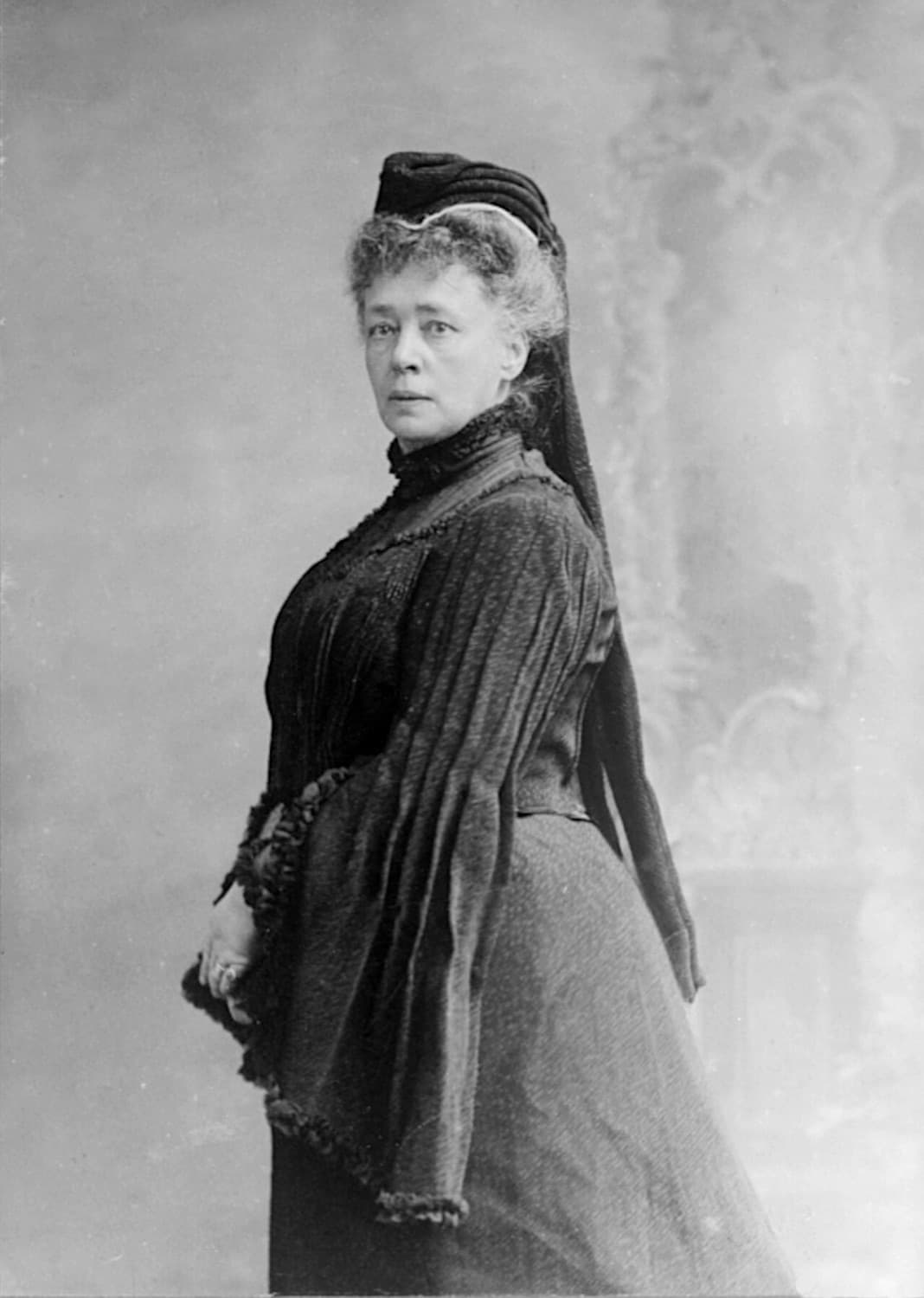
Who was Bertha von Suttner?
Bertha von Suttner was an Austrian writer and pacifist who in 1905 became the first woman to receive the Nobel Peace Prize. She was born on 9 June 1843 in Prague as Countess Kinsky, into an aristocratic family with a military tradition. Her father, a field marshal, died shortly before her birth, and she grew up with her mother. The Nobel Foundation describes how she accepted the militaristic traditions of her class without question for the first half of her life and vigorously opposed them for the second half.
As a young woman she studied languages and music and for a time hoped for a career as an opera singer. At thirty she took a position in Vienna as governess to the four daughters of the Suttner family and fell in love with the youngest son of the house, Arthur. The family disapproved of the match. In 1876 Bertha went briefly to Paris as secretary to Alfred Nobel, but soon returned and married Arthur in secret.
The couple moved to the Caucasus and lived there for nine years from teaching languages and music and increasingly from writing. During this time she wrote novels and her first serious book, the “Inventarium einer Seele” (Inventory of a Soul). In it she engaged with Darwin and Spencer, whom she had read together with her husband. The idea of a society that achieves progress through peace already appears there.
In 1885 the Suttners returned to Austria, and in the years that followed Bertha von Suttner wrote most of her books. Through friends they learned of peace societies in London and on the Continent that called for arbitration instead of arms. The novelist became one of the best known voices of this movement. She died in Vienna on 21 June 1914.
What did Bertha von Suttner stand for?
She campaigned for disputes between states to be settled by courts of arbitration rather than on the battlefield. She shared this goal with the peace societies of her time: international law instead of armed force and, as a result, smaller armies. In her Nobel lecture she called the question of whether violence or law should prevail between states the most vital problem of her era. To her, war was not a law of nature but an institution that people can change.
Her most effective tool was literature. In her book “Das Maschinenzeitalter” (The Machine Age) she already warned of the consequences of exaggerated nationalism and armament. With the novel “Lay Down Your Arms” she wanted, in her own words, to serve the peace movement by writing a book that would spread its ideas. The heroine lives through the wars of the author’s own day with all their horrors, and Suttner researched these wars carefully.
At first the novel struggled to find a publisher, and several turned it down. When it appeared at the end of 1889, it was so successful that it was reprinted a year later and translated into several languages. The Nobel Foundation counts it among the most influential books of the nineteenth century. From then on Suttner devoted much of her time to congresses, lectures, letters and building up peace groups.
After her husband died in 1902, she continued their joint work alone, as he had wished. She warned against the militarisation of China and against using the new field of aviation as a weapon. Again and again she stressed that Europe was one and that only its unification could prevent the looming catastrophe. Her efforts were addressed to governments as much as to the public.
From her Nobel lecture of 18 April 1906 in Kristiania, delivered in German; English translation published by the Nobel Foundation.
This question of whether violence or law shall prevail between states is the most vital of the problems of our eventful era, and the most serious in its repercussions.
What did Bertha von Suttner achieve for peace?
She made the peace movement visible in the German speaking world and helped build its organisations. In 1891 she founded the Austrian Society of the Friends of Peace and remained its president until her death. In the same year she was elected vice president of the International Peace Bureau at the World Peace Congress in Rome and raised funds to establish it in Bern. She and the journalist Alfred Hermann Fried were involved in founding the German Peace Society in 1892.
From 1892 she and Fried published the journal “Die Waffen nieder!”, which she edited until the end of 1899. After that she wrote regular commentaries for Fried’s “Friedens-Warte”. She promoted the Hague Peace Conference of 1899 with public meetings and lectures and reported from it for the Neue Freie Presse. Afterwards she helped make the Permanent Court of Arbitration created there better known.
Her friendship with Alfred Nobel played a special role. In 1892 she promised to keep him informed about the progress of the peace movement, and in January 1893 he wrote to her about a peace prize he hoped to found. The Nobel Foundation considers there to be little doubt that this friendship influenced the content of his will. The first Nobel Peace Prize went in 1901 to Henry Dunant, the founder of the Red Cross, together with Frédéric Passy.
In 1905 Suttner received the prize herself, as the first woman, for her audacity to oppose the horrors of war. At the time she was seen as sharing the leadership of the movement with Passy, and at the Hague congress of 1913 she was honoured as its “generalissimo”. She made two lecture tours of the United States, the last in 1912 when she was almost seventy. President Theodore Roosevelt received her at the White House in 1904.
What criticism is there of Bertha von Suttner?
The most important limit of her work became clear in 1914: the world war she had warned against for decades broke out two months after her death. The World Peace Congress planned for Vienna in September 1914 never took place. The war and its aftermath also prevented the monument the movement had planned for her. Arbitration courts and conferences had not kept the great powers from war.
Even in her lifetime the peace movement was ridiculed. According to the exhibition project “The First World War”, pacifists were dismissed before and during the war as sentimental, soft or effeminate. Their opponents regarded their concepts as unrealistic dreams and utopias. In the case of her fellow campaigner Alfred Hermann Fried, who was of Jewish origin, antisemitic hostility was added to this.
There was also disagreement within the movement. Her closest collaborator Alfred Hermann Fried considered arbitration courts meaningful only once an international organisation had been created first. With his “causal pacifism” he wanted to address the causes of war in the structures of society, rather than relying mainly on appeals and treaties. Despite this criticism, Fried worked closely with her and with the peace societies.
Her thinking was also shaped by the belief in progress of her time. In her Nobel lecture she invoked laws of evolution that would lead humanity towards ever better conditions. The First World War called this expectation fundamentally into question shortly after her death. With the Permanent Court of Arbitration in The Hague, which she had promoted, an institution embodying her concern did already exist.
Also from the Nobel lecture of 1906; English translation published by the Nobel Foundation.
It is erroneous to believe that the future will of necessity continue the trends of the past and the present.
What remains of Bertha von Suttner?
What remains is above all the idea that peace is a task that can be organised. She relied on books, journals, associations and congresses, that is, on tools through which many people could take part. Her novel showed a wide readership what war means for individual people. This combination of storytelling and engagement is still a way of winning people for peace work today.
Her part in the Nobel Peace Prize also endures. Many give her credit for inspiring the prize, as the Nobel Foundation notes, since she corresponded with Alfred Nobel about peace for years. Since then the prize has honoured people on very different paths. Henry Dunant stood in 1901 for help to the wounded, while Albert Schweitzer received the prize for 1952 and became known for his medical work in Africa and his ethic of “reverence for life”.
Most of her papers and manuscripts are held in the Peace Archives of the United Nations Library in Geneva. Her writings appeared as early as 1906 in a collected edition of twelve volumes. In 1913 “Lay Down Your Arms” was made into a film, still during her lifetime. Her work was thus known far beyond the peace movement before the First World War.
For peace work today her example is more an inspiration than a model to copy. It shows that a single voice can shift a debate if it stays persistent and joins forces with others. It also shows that good arguments alone do not prevent a war. Every commitment to peace still moves between these two experiences today.
Frequently asked questions
- When and where did Bertha von Suttner live?
- Bertha von Suttner was born in Prague, Austrian Empire (now Czech Republic), and lived from 9 June 1843 to 21 June 1914.
- Why did Bertha von Suttner receive the Nobel Peace Prize?
- Bertha von Suttner received the Nobel Peace Prize in 1905 as the first woman. She was honoured for her audacity to oppose the horrors of war.
- What role did Bertha von Suttner play?
- Bertha von Suttner was a writer, pacifist and president of the Austrian Peace Society.
Sources
Life
- 1843Born on 9 June in Prague as Countess Kinsky. Her father, a field marshal, had died shortly before her birth.
- 1876Briefly secretary to Alfred Nobel in Paris. After her secret marriage to Arthur von Suttner, the couple lives in the Caucasus for nine years.
- 1889The novel “Lay Down Your Arms” appears after several publishers had rejected it, and makes her known in the peace movement.
- 1891Founding of the Austrian Society of the Friends of Peace, which she leads as president until her death.
- 1899She campaigns publicly for the Hague Peace Conference and reports from it for the Neue Freie Presse.
- 1905She becomes the first woman to receive the Nobel Peace Prize and gives her lecture in Kristiania in April 1906.
- 1914Dies on 21 June in Vienna, two months before the outbreak of the First World War she had warned against.
More portraits
- Henry Dunant8 May 1828 to 30 October 1910A Geneva businessman who cared for the wounded after a battle and turned the experience into the idea of the Red Cross and the Geneva Convention
- Albert Schweitzer14 January 1875 to 4 September 1965A theologian, organist and doctor who built a hospital in Africa and, with his ethic of reverence for life, spoke out against war and nuclear weapons
From role model to a mission of your own
None of these people acted alone. What connects them is the step from concern to action. That step is possible on a small scale too: in a neighbourhood, a school, a club.
Find your peace mission