People
Albert Schweitzer
A theologian, organist and doctor who built a hospital in Africa and, with his ethic of reverence for life, spoke out against war and nuclear weapons
In numbers
1913
Hospital founded
at Lambaréné in present-day Gabon
500
Patients at a time
the hospital could take in by the early 1960s
1952
Nobel Peace Prize
reserved and awarded on 10 December 1953
- Lifespan
- 14 January 1875 to 4 September 1965
- Origin
- Kaysersberg, Alsace (then German Empire, now France)
- Role
- Theologian, organist, doctor and founder of the hospital at Lambaréné
- Award
- Nobel Peace Prize 1952, awarded in 1953
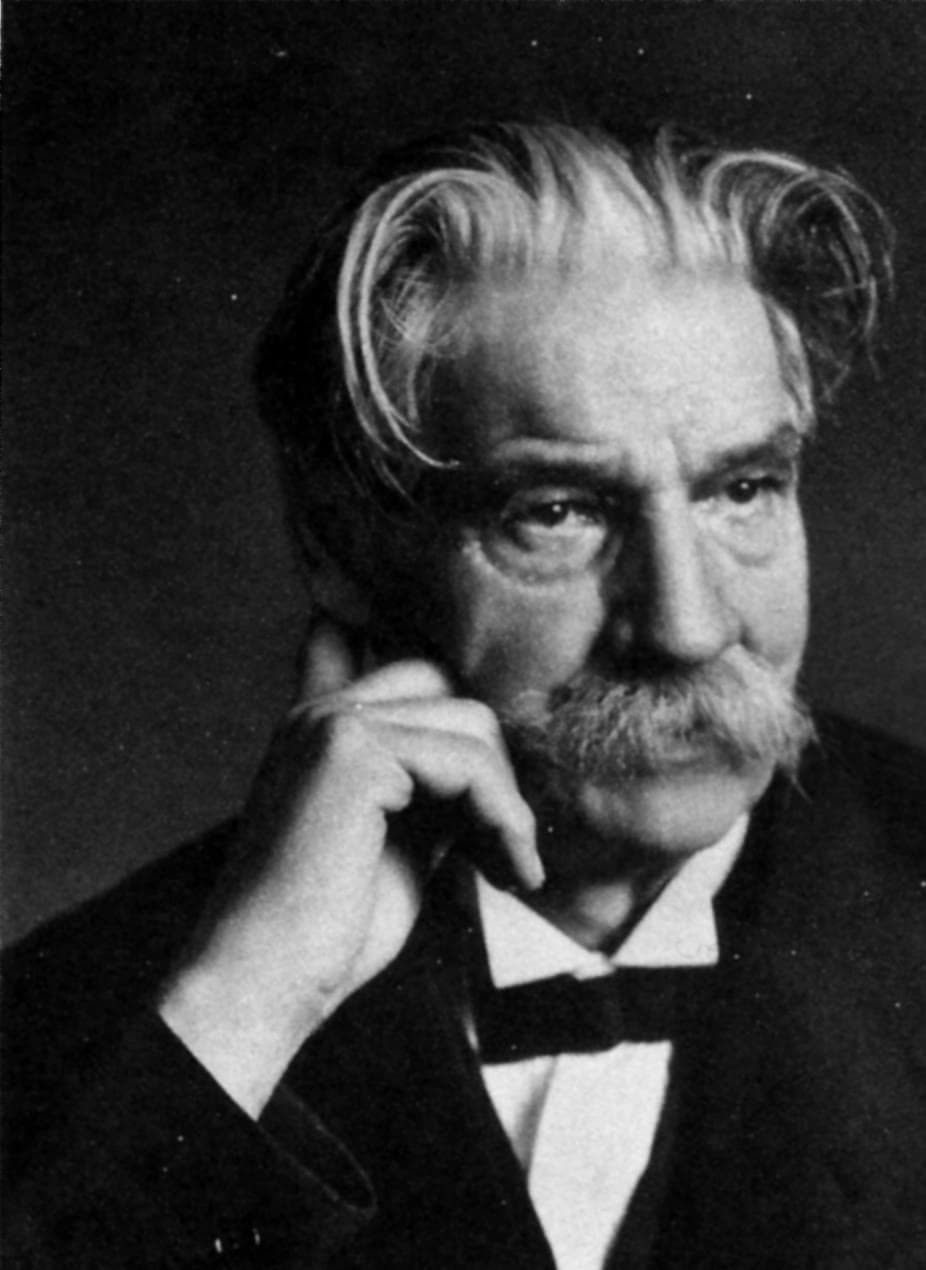
Who was Albert Schweitzer?
Albert Schweitzer was an Alsatian theologian, organist and doctor who founded a hospital at Lambaréné in present-day Gabon in 1913 and received the Nobel Peace Prize for 1952. He was born on 14 January 1875 in Kaysersberg, which at the time belonged to the German Empire. He grew up in Günsbach near Colmar, where his father was the pastor. According to the Nobel Foundation, he came from a family that had for generations been devoted to religion, music and education.
From 1893 he studied theology and philosophy at the University of Strasbourg. In 1899 he obtained a doctorate in philosophy with a dissertation on the religious philosophy of Kant, followed a year later by his degree in theology. He preached at St. Nicholas Church in Strasbourg and taught as a professor of the New Testament. His book of 1906 on the quest of the historical Jesus established his reputation as a theologian.
He was also an internationally known organist and an expert on Johann Sebastian Bach. He first played in his father’s church at the age of nine and gave concerts until old age. He wrote a book on Bach, first in French and later rewritten in German, and a work on organ building. With the income from concerts he later financed his medical studies and his hospital.
In 1905 he decided to go to Africa as a doctor and, at the age of thirty, began studying medicine. After obtaining his medical degree he travelled to Lambaréné with his wife Helene in 1913. In 1917 both were interned in France as prisoners of war; after their release he spent six years in Europe and wrote, among other things, “On the Edge of the Primeval Forest”. Apart from interruptions he spent the rest of his life at Lambaréné, where he died on 4 September 1965 and where he is buried.
What did Albert Schweitzer stand for?
He stood for an ethic he called “reverence for life”, which includes all life and not only human life. Its starting point is the sentence “I am life that wants to live, in the midst of life that wants to live”. According to Schweitzer, whoever takes this seriously recognises their bond with everything that lives. Good then means preserving and promoting life, evil means destroying and hindering it.
According to the German Albert Schweitzer Centre, he watched with concern at the beginning of the twentieth century as human knowledge grew while ethical attitudes withered. He therefore looked for a foundation of ethics that would bridge the differences between worldviews, religions and cultures. Reverence for life was to be this foundation. He himself later gave up eating meat to spare animals.
For him this ethic was not a mere idea but a reason to act. He gave up a secure career as a professor to treat the sick in Africa. According to the Nobel Foundation, at Lambaréné he was doctor and surgeon, pastor, administrator, superintendent of buildings and host to countless visitors. He raised the funds for this through books, lectures and concerts, supplemented by donations from many countries.
In the last decades of his life he campaigned increasingly for peace and nuclear disarmament. In his Nobel lecture “The Problem of Peace” on 4 November 1954 in Oslo, he called for rejecting war for an ethical reason, because war makes us guilty of the crime of inhumanity. The League of Nations and the United Nations had been unable to bring about peace, he argued, because legal institutions alone could not create a spirit of peace. He saw this spirit as a task for each individual and for nations.
The starting sentence of his ethic of reverence for life, as quoted by the German Albert Schweitzer Centre; own translation from the German.
I am life that wants to live, in the midst of life that wants to live.
What did Albert Schweitzer achieve for peace?
He built a hospital that helped the sick for decades and made humanitarian aid visible to a wide public in Europe and America. After his return in 1924 he expanded the hospital at Lambaréné to seventy buildings. By the early 1960s, according to the Nobel Foundation, it could take in more than 500 patients at any one time. The hospital still exists today.
He received the Nobel Peace Prize for 1952 on 10 December 1953, because the prize had first been reserved in 1952. The Nobel Committee honoured his altruism, his reverence for life and his tireless humanitarian work. It had, the committee said, helped make the idea of brotherhood between men and nations a living one. With the prize money he started a village for leprosy patients at Lambaréné.
This places him in a line with Henry Dunant, who received the first Nobel Peace Prize in 1901 for helping wounded soldiers. In his Nobel lecture Schweitzer himself recalled the Geneva Convention of 1864, which grew out of the efforts of the Red Cross. It had, he said, helped hundreds of thousands of combatants and civilians. In view of modern weapons, however, it could no longer be a question of humanising war, only of overcoming it.
He used his reputation to warn against nuclear weapons. In 1957 he spoke on the radio to people all over the world, warning against nuclear tests and radioactive fallout. In 1958 three further appeals from Oslo followed, and according to the German Albert Schweitzer Centre he also addressed President Eisenhower and, in 1963, the Kennedy administration. In 1963 he lived to see the nuclear powers agree to ban nuclear weapons tests in the atmosphere.
What criticism is there of Albert Schweitzer?
The main criticism concerns the colonial setting of his work at Lambaréné. The hospital lay in a French colony and was long seen as the epitome of humanitarian aid. According to the University of Bern, with the independence of African states it came increasingly to be seen as an example of backward, colonial medicine. In 2025 the university’s Institute for the History of Medicine published the first critical history of the hospital.
The Bern researchers describe an aid project that, despite its humanitarian aims, remained entangled in colonial attitudes. It was linked to the goal of “civilising” the African population. Schweitzer’s well-known image of the European as the “big brother” who helps his “little brother” in Africa stands for this. His Nobel lecture, too, speaks of “semicivilized” and “primitive” people in its English version.
It is also criticised that his help remained local. According to the Bern study, the hospital offered a good medical service but aimed neither to train staff nor to improve the health system as a whole. According to the medical historian Hubert Steinke, the aim was not only to help people in Africa but also to renew the spirit of humanity in the West. At the same time, as a private institution, the hospital pursued no political, economic or missionary goals.
Steinke himself warns against one-sided judgements. We should be satisfied neither with glorification nor with simplistic condemnation, he says of the findings. In his words, the project shows how necessary solid historical research is in order to avoid one-sided assessments. The book is based on rich archival and photographic material from the years 1913 to 1965.
His definition of good and evil from the ethic of reverence for life, quoted by the German Albert Schweitzer Centre; own translation from the German.
Good is to preserve life and to promote life, evil is to destroy life and to hinder life.
What remains of Albert Schweitzer?
What remains above all is the ethic of reverence for life. It asks us to take every life seriously and to consider with every action whether it harms other life unnecessarily. It explicitly includes animals and plants, down to the earthworm on the road that one puts back on the grass after rain. The Nobel Foundation calls the expression the key to his personal philosophy.
The hospital itself also endures. It still exists today and continues to be supported largely by donations, above all from Switzerland. According to the University of Bern, the “Lambaréné spirit” meant a simple but effective and humane medicine that gave patients a great deal of freedom. More recent research has shown that it provided good medical care and was at the same time bound by its era. Both are now part of its history.
Within the Nobel Peace Prize he connects two traditions. Like Henry Dunant, he placed direct help for the suffering at the centre. Like Bertha von Suttner, who received the prize in 1905, he used his Nobel lecture for a warning: she against a looming world war, he against the nuclear danger. While Suttner relied mainly on courts of arbitration, Schweitzer considered legal institutions alone too weak and looked for peace in an ethical attitude.
For peace work today his question of how an inner attitude becomes concrete action remains important. His life shows that help can reach many people when conviction and persistence come together. The criticism of Lambaréné also shows how important it is to work with people and not only for them. Both make him a figure from whom one can learn.
Frequently asked questions
- When and where did Albert Schweitzer live?
- Albert Schweitzer was born in Kaysersberg, Alsace (then German Empire, now France), and lived from 14 January 1875 to 4 September 1965.
- Why did Albert Schweitzer receive the Nobel Peace Prize?
- Albert Schweitzer received the Nobel Peace Prize for 1952 on 10 December 1953, because the prize had first been reserved in 1952. The Nobel Committee honoured his altruism, his reverence for life and his tireless humanitarian work.
- What role did Albert Schweitzer play?
- Albert Schweitzer was a theologian, organist, doctor and founder of the hospital at Lambaréné.
Sources
Life
- 1875Born on 14 January in Kaysersberg in Alsace, grows up in the parsonage at Günsbach.
- 1905After doctorates in philosophy and theology he begins studying medicine in Strasbourg in order to go to Africa as a doctor.
- 1913Together with his wife Helene he founds the hospital at Lambaréné in French Equatorial Africa.
- 1917He and his wife are sent to a French internment camp as prisoners of war and are released in 1918.
- 1953He receives the reserved Nobel Peace Prize for 1952 and uses the prize money to build a village for leprosy patients.
- 1957In a radio address he warns the world against nuclear weapons tests and the dangers of radioactive fallout.
- 1965Dies on 4 September in Lambaréné, where he is also buried.
More portraits
- Henry Dunant8 May 1828 to 30 October 1910A Geneva businessman who cared for the wounded after a battle and turned the experience into the idea of the Red Cross and the Geneva Convention
- Bertha von Suttner9 June 1843 to 21 June 1914A writer whose anti-war novel shaped an entire movement and who in 1905 became the first woman to receive the Nobel Peace Prize
From role model to a mission of your own
None of these people acted alone. What connects them is the step from concern to action. That step is possible on a small scale too: in a neighbourhood, a school, a club.
Find your peace mission