People
Carl von Ossietzky
The journalist who exposed secret rearmament in the Weimar Republic, refused to flee and received the Nobel Peace Prize as a prisoner of the Nazis
In numbers
1935
Nobel Peace Prize
awarded retroactively in November 1936, while a prisoner
18
months in prison
sentence of 1931 after an article on secret rearmament
500
nomination letters
more than 500 reached the Nobel Committee in two years
- Lifespan
- 3 October 1889 to 4 May 1938
- Origin
- Hamburg, Germany
- Role
- Journalist, editor-in-chief of “Die Weltbühne” and pacifist
- Award
- Nobel Peace Prize 1935, awarded in 1936
Who was Carl von Ossietzky?
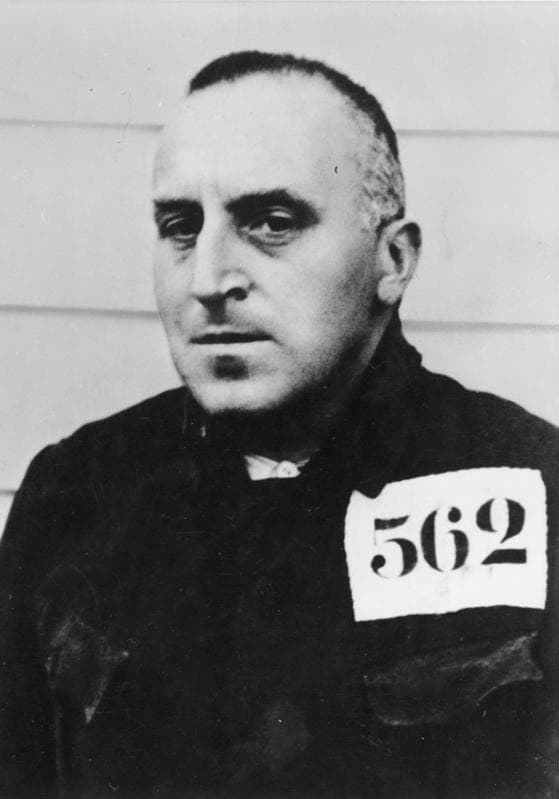
Carl von Ossietzky was a German journalist and pacifist, editor-in-chief of the weekly “Die Weltbühne” from 1927 and one of the most important journalists of the Weimar Republic. He made public that the Reichswehr was secretly rearming in breach of the Treaty of Versailles, and for this he was convicted in 1931 of betraying military secrets. After the Nazis came to power he was arrested in 1933 and taken to concentration camps. As a prisoner he was awarded the Nobel Peace Prize for 1935 retroactively in November 1936.
He was born in Hamburg on 3 October 1889, the son of a stenographer who had moved there from Silesia and a businesswoman. He left secondary school without a qualification and from 1907 to 1914 worked as an assistant clerk at the Hamburg district court. As early as 1908 he joined the German Peace Society, and soon he was writing for the journal “Das freie Volk”. In 1914 he was fined for an article that attacked the military courts.
In the First World War he served as an infantryman on the Western Front from 1916 to 1918 and took part in the Battle of Verdun. Afterwards he wrote against the romanticising and continuation of the war. In 1919 he moved to Berlin and became general secretary of the German Peace Society, where he worked with Ludwig Quidde. In 1920 he was one of the co-initiators of the “No More War” movement and met Kurt Tucholsky through it.
After working for the “Volks-Zeitung” and the weekly “Das Tage-Buch”, he took over “Die Weltbühne” in 1927, for which Tucholsky also wrote. In his editorials he opposed the hollowing out of the constitution and criticised party politics. After his arrest in 1933 he was held in the Sonnenburg and Esterwegen concentration camps, where he was mistreated and fell seriously ill with tuberculosis. He died in a Berlin hospital on 4 May 1938, under police surveillance to the end.
What did Carl von Ossietzky stand for?
He stood for peace, disarmament and a republic carried by its citizens. In his only book-length publication, “Der Anmarsch der neuen Reformation”, he stressed in 1919 the importance of a civic and democratic awareness of the state for the young Weimar Republic. After his experiences on the Western Front he opposed any glorification of war. The Nobel Committee later honoured him as a defender of freedom of speech and as a symbol of peace.
His most important tool was the editorial. In “Die Weltbühne” he opposed the hollowing out of the constitution, criticised party politics and warned against rearmament. Because of this criticism he was brought before the courts and convicted several times. He refused to be intimidated and continued to publish texts against the secret rearmament of the Reichswehr.
According to the University of Oldenburg, he recognised the dangers of the Nazi movement early and analysed them sharply. There was hardly a political subject of the Republic that he did not take up. In early 1933 he refused to flee abroad, even though he was aware of the danger. When he began his prison sentence in 1932 he had already explained that an oppositionist who had crossed the border would soon speak hollowly into the country.
Behind this stance lay the conviction that criticism only works if it stays connected with the country it fights for and against. In his farewell article “Rechenschaft” of 10 May 1932 he wrote that he was going to prison because as a prisoner he was at his most inconvenient. He would not bow to the Reich Court, he wrote, but would remain as a prisoner a living demonstration against a verdict he considered politically biased. Willy Brandt summed up in 1971 that he had fought militarism and nationalism with a sharp pen.
Written in 1921 and quoted by Willy Brandt in his Nobel Lecture in Oslo on 11 December 1971, in the English translation published by NobelPrize.org.
Many nations have fought against each other, but the blood that has flowed is of only one kind: the blood of Europe’s citizens.
What did Carl von Ossietzky achieve for peace?
He made public that the Reichswehr was secretly rearming in breach of the provisions of the Treaty of Versailles. According to NobelPrize.org, an article in “Die Weltbühne” revealed how the German government was building up a secret air force with Soviet help. In a sensational trial he was sentenced to 18 months in prison for this in 1931. He began his sentence in Berlin in May 1932 and was released early in December under a Christmas amnesty.
His greatest effect came as a prisoner. In 1934 friends and colleagues decided to use the Nobel Peace Prize to help him, and over two years the Nobel Committee received more than 500 letters nominating him. The young Willy Brandt, who had fled from the Nazis to Norway, was one of the important supporters of the campaign and contacted the Nobel Committee. Albert Einstein also wrote to the committee, stressing the historic significance of such a decision.
In November 1936 the Nobel Committee awarded him the prize retroactively for 1935. According to NobelPrize.org, this was the first time the Nobel Peace Prize went to a person at odds with his own country’s regime. The award helped to rouse public opinion in the struggle against Nazism. Under international pressure he was allowed to leave the concentration camp for treatment, but he remained under guard until his death.
Those in power tried to make him decline the prize. According to Willy Brandt, he was to be set free in return, given financial security and left alone in future, but he said no. He was not allowed to travel to Oslo, and the award ceremony took place without him. Hitler then decreed that no German could accept a Nobel Prize in future.
What criticism is there of Carl von Ossietzky?
During his lifetime he was attacked above all politically and in the courts. For the Reich Court, the publication about secret rearmament was a betrayal of military secrets, and the verdict branded him a traitor. He himself called this a “highly defamatory label” and considered the verdict politically biased and legally lopsided. At its core was a conflict between the state’s interest in secrecy and the public’s claim to learn about breaches of a treaty.
The award of the Nobel Prize was also fiercely contested. In Norway the political right protested against his candidacy; conservatives such as the writer Knut Hamsun considered him a criminal, and right-wing newspapers feared the decision could provoke Germany. Several members of Alfred Nobel’s family also criticised the choice. Writers such as H. G. Wells and Aldous Huxley, by contrast, took his side.
The Norwegian government visibly kept its distance. Foreign Minister Halvdan Koht withdrew from the Nobel Committee in the autumn of 1936 to underline its independence, and the royal family stayed away from the ceremony, breaking with tradition. The committee chairman, Fredrik Stang, addressed the objection that Ossietzky was more a symbol than a peacemaker. He was not merely a symbol, Stang said, but a mission and a man, and for these reasons alone he had received the prize.
After 1945, too, his name long remained controversial. When students proposed after the founding of the University of Oldenburg in 1973 that it be named after him, the idea met with broad approval within the university but not outside it. It took almost 20 years before the Lower Saxony state parliament cleared the way for the name Carl von Ossietzky University of Oldenburg. The university saw the name as an expression of its social commitment.
From his farewell article “Rechenschaft” (Accounting) in “Die Weltbühne” of 10 May 1932, the day he began his sentence; own translation.
… I am not going to prison out of loyalty, but because as a prisoner I am at my most inconvenient.
What remains of Carl von Ossietzky?
What remains is the example of a journalist who stood up for free speech and against his country’s secret rearmament and endured prison, mistreatment and illness for it. He shows that work for peace does not only happen in negotiations and treaties, but also in public criticism of militarism and nationalism. The 1936 award made him known worldwide and became a sign against the Nazi regime. It shows that the Nobel Peace Prize can also make persecuted critics of their own government visible.
Willy Brandt, who had campaigned for him as a young exile in Norway, thanked the Nobel Committee for this choice “in the name of free Germany” in his own Nobel Lecture in 1971. He called the honour a moral victory over the ruling powers of barbarism. In the same speech he recalled Gustav Stresemann, who had received the Nobel Peace Prize in 1926 as Foreign Minister of the Weimar Republic. Stresemann negotiated understanding with France from office, Ossietzky criticised from outside as a journalist, and both belong to the history of work for peace in the Weimar Republic.
Today the University of Oldenburg bears his name. As a reform university it wanted to make the sciences part of democratic society and to link its work with social responsibility. The university describes him as a committed democrat and pacifist who was particularly feared by the enemies of the Weimar Republic. His name thus stands there for the connection between science, democracy and peace.
His life also shows the price that criticism can have in a dictatorship. He refused to flee, stayed in Germany and died in 1938 of the consequences of mistreatment and tuberculosis. In Oslo in 1971 Brandt quoted a sentence Ossietzky had written in 1921: many nations had fought against each other, but only one kind of blood had flowed, the blood of Europe’s citizens. Brandt spoke there 35 years after a ceremony at which the laureate had been forced to be absent.
From the same article “Rechenschaft”, in which he explained why he did not flee abroad; own translation.
The oppositionist who has gone across the border soon speaks hollowly into the country.
Frequently asked questions
- When and where did Carl von Ossietzky live?
- Carl von Ossietzky was born in Hamburg, Germany, and lived from 3 October 1889 to 4 May 1938.
- Why did Carl von Ossietzky receive the Nobel Peace Prize?
- Carl von Ossietzky was awarded the Nobel Peace Prize for 1935 retroactively in November 1936. At that time he was a prisoner of the National Socialists.
- What role did Carl von Ossietzky play?
- Carl von Ossietzky was a journalist, editor-in-chief of “Die Weltbühne” and a pacifist.
Sources
Life
- 1919Moves to Berlin and becomes general secretary of the German Peace Society.
- 1927Editor-in-chief of the weekly “Die Weltbühne”, for which Kurt Tucholsky also writes.
- 1931Sentenced to 18 months in prison for betraying military secrets after an article on the secret armament of the Reichswehr.
- 1932Begins his sentence in May and is released early in December under a Christmas amnesty.
- 1933Arrested on the night of the Reichstag fire, then held in the Sonnenburg and, from 1934, Esterwegen concentration camps.
- 1936Seriously ill with tuberculosis, he is awarded the Nobel Peace Prize for 1935 in November. He is not allowed to travel to Oslo.
- 1938On 4 May he dies in a Berlin hospital, still under police surveillance.
More portraits
- Gustav Stresemann10 May 1878 to 3 October 1929The Weimar foreign minister who, after the First World War, chose negotiation over confrontation and secured peace on the Rhine by treaty with France
- Willy Brandt18 December 1913 to 8 October 1992The chancellor who used talks, treaties and a silent gesture in Warsaw to seek détente between East and West and reconciliation with Germany’s eastern neighbours
From role model to a mission of your own
None of these people acted alone. What connects them is the step from concern to action. That step is possible on a small scale too: in a neighbourhood, a school, a club.
Find your peace mission