How wars ended
The Good Friday Agreement
After three decades of violence, two governments and eight parties agreed on an order that the public then voted on
In numbers
30
years of conflict
some 3,500 lives lost since the late sixties
71 %
approval in Northern Ireland
in the referendum of 22 May 1998
10
parties to the talks
two governments and eight parties
- Period
- June 1996 to May 1998
- Place
- Belfast
- Parties
- The governments of the United Kingdom and Ireland along with eight Northern Irish parties, chaired by the former US senator George Mitchell
- Outcome
- An agreement of 10 April 1998, confirmed by referendums in Northern Ireland and in Ireland on 22 May 1998
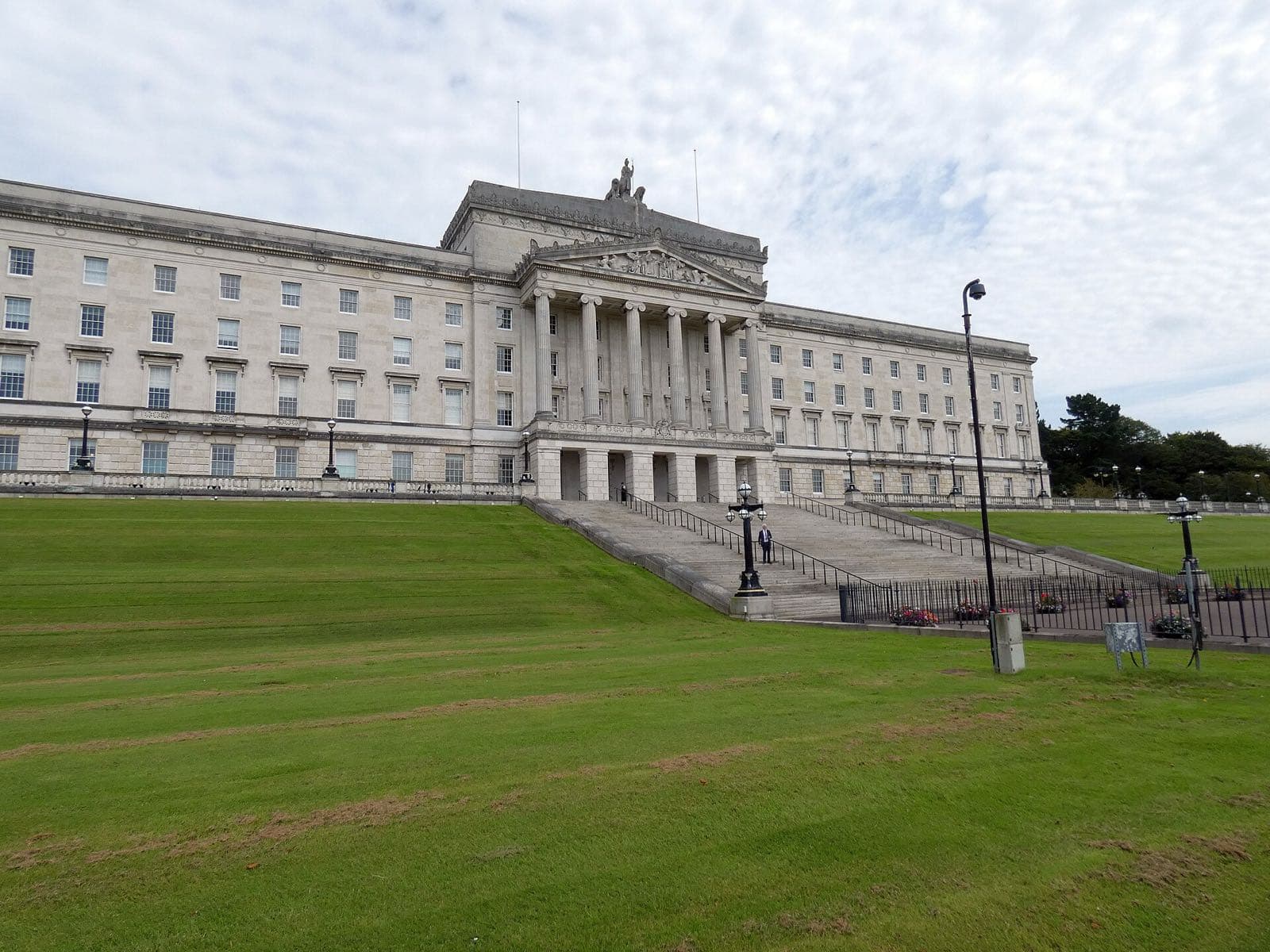
What was the Good Friday Agreement?
The Good Friday Agreement, also called the Belfast Agreement after the place it was made, was concluded on 10 April 1998 between the governments of the United Kingdom and Ireland and eight Northern Irish parties. It ended a conflict that had cost some 3,500 lives since the late sixties.
The dispute was about the constitutional status of Northern Ireland and about the standing of two communities towards each other. Both questions had been fought over for decades by armed groups on both sides and with the involvement of state security forces.
What is remarkable about the agreement is that it did not decide the question. It laid down that the status of Northern Ireland is for the people there to determine, and built institutions in which both sides have to govern together until they do.
Who negotiated, and who mediated?
At the table sat the two governments and eight parties, among them those seeking to remain in the United Kingdom and those seeking unification with Ireland. Not every party in the region took part, and some walked out during the process.
The chair was the former US senator George Mitchell. Outside mediation was the hinge of the procedure: it needed someone both sides trusted to favour neither, and who held the talks together when they were about to fail.
The ground had been prepared for years. The Downing Street Declaration of 1993 established that the question of status was for the people to decide. The ceasefires of 1994 made talks possible at all. The success of 1998 rests on that groundwork.
What was agreed?
First, the principle of consent: Northern Ireland remains part of the United Kingdom for as long as a majority of its people wish it. Change is possible, but only that way. The question was thus not decided but tied to a procedure.
Second, the institutions: a Northern Ireland assembly with an executive in which both communities must be represented, along with a North-South ministerial council and a British-Irish council. Governing happens jointly, which makes the parties dependent on one another.
Third, the everyday questions after a war: decommissioning of the armed groups, early release of prisoners, reform of policing, human rights and equality, and the right of every person in Northern Ireland to hold British or Irish citizenship, or both.
How long did the peace hold?
To this day. Violence did not return on the scale that had marked the three decades before, and the question of status has since been argued politically rather than by arms.
It has not been calm. The power-sharing executive was suspended several times and went unformed for years when the parties could not agree. Decommissioning dragged on until 2005. The agreement survived those crises because it fixed no state of affairs, only a procedure the parties could return to.
The two negotiators John Hume and David Trimble received the Nobel Peace Prize in 1998. More notable than the award is that the agreement was confirmed on 22 May 1998 in two referendums, with some 71 per cent in Northern Ireland and more than 94 per cent in Ireland. It rests on two votes rather than on signatures.
What is there to learn from it?
The key move is the separation of question and procedure. Which state Northern Ireland belongs to was not answered. What was answered is who decides it, and how. That let both sides sign without giving up their aim.
The second move is confirmation by the public. An agreement that has been voted on is harder to present as a betrayal by one's own leadership. The referendums were not decoration; they are why the result survived its crises.
The third is outside mediation. It took a chair both sides trusted to favour neither. That role cannot be filled from inside a conflict, and it is the point at which many negotiations never begin.
What follows from it
The agreement did not end the dispute, it ended violence as a means within it. Since then the dispute runs through institutions.
Sources
How it unfolded
- From 1968What begins as a civil rights movement turns into a conflict that costs some 3,500 lives over three decades.
- December 1993The Downing Street Declaration of the British and Irish governments states that the question of status is for the people to decide.
- August 1994The IRA declares a ceasefire, and loyalist groups follow weeks later. Talks become possible.
- June 1996Multi-party talks open under the chairmanship of former US senator George Mitchell, an outside chair both sides trusted to favour neither.
- 10 April 1998The agreement is signed, on a Good Friday, after a night of talks that ran past the deadline set for them.
- 22 May 1998Referendums in Northern Ireland and in Ireland confirm the agreement. Only then does it rest on something more than signatures.
- December 1999The power-sharing executive takes office. In the years that follow it is suspended and restored several times.
- July 2005The IRA declares its armed campaign over. Decommissioning, settled in the agreement only in principle, is complete seven years after it.
More in this series
- The Dayton AgreementNovember to December 1995Three weeks sealed off on an air force base, and at the end not merely a ceasefire but the constitution of a state
- The Camp David AccordsSeptember 1978 to March 1979Thirteen days without an audience, a mediator who would not let the parties leave, and at the end the first peace between Israel and an Arab state
From history to a mission of your own
Every one of these treaties was the work of people who thought it could be done. The same stance is what it takes on a small scale: in a neighbourhood, a school, a club.
Find your peace mission